Monday, February 23, 2009

Re: Is Jesus Jehovah? Please answer the following #2

grandpa len

Continued from my "Re: Is Jesus Jehovah? Please answer the following #1" with this, the second part of my three-part response to your questions in a comment under my

[Right: Robert Bowman's, "Why You Should Believe in the Trinity: An Answer to Jehovah's Witnesses" (1989). An excellent book responding to the Watchtower Bible & Tract Society's booklet, "Should You Believe in the Trinity?," and briefly explaining and defending the Christian doctrine of the Trinity.]

post, "Watchtower Errors by Bible verse: Index."

Again, your words are bold to distinguish them from mine.

----- Original Message -----
From: grandpa len
To: Stephen E. Jones
Sent: Thursday, February 12, 2009 10:29 AM
Subject: [Jesus is Jehovah!] New comment on Watchtower Errors by Bible verse: Index.

>who did jesus worship?

I am not aware of any Bible verse that actually states that Jesus "worshipped" (Gk. proskuneo or latreuo) anyone. However, since He was, in His human nature, a devout Jewish man, Jesus would no doubt have obeyed the commandment in Dt 6:13:

"Thou shalt fear Jehovah thy God; and him shalt thou serve, and shalt swear by his name."

which he quoted from the Septuagint in Mt 4:10:

"Then saith Jesus unto him, Get thee hence, Satan: for it is written, Thou shalt worship the Lord [Gk. kurios] thy God, and him only shalt thou serve."

and Lk 4:8:

"And Jesus answered and said unto him, It is written, Thou shalt worship the Lord thy God, and him only shalt thou serve."

However, significantly, there is no Biblical evidence that Jesus Himself worshipped "Jehovah" (i.e. Gk. kurios "Lord") but instead what evidence there is, is that Jesus worshipped "Father." For example, a verse cited by Jehovah's Witnesses as proof that Jesus worshipped Jehovah, Jn 4:22, where Jesus told the Samaritan woman " we [Jews] worship that which we know ..." the wider context reveals it was not "Jehovah" (i.e. Gk. kurios "Lord") but "the Father" who is to be worshipped:

Jn 4:21-24" Jesus saith unto her, Woman, believe me, the hour cometh, when neither in this mountain, nor in Jerusalem, shall ye worship the Father. Ye worship that which ye know not: we worship that which we know; for salvation is from the Jews. But the hour cometh, and now is, when the true worshippers shall worship the Father in spirit and truth: for such doth the Father seek to be his worshippers. God is a Spirit: and they that worship him must worship in spirit and truth."

Which does not itself preclude the Son also being worshipped [Gk. proskuneo], since He was (Mt 2:2,8,11; 8:2; 9:18; 14:33; 15:25; 20:20; 28:9,17; Mk 5:6; Lk 24:52; Jn 9:38; Heb 1:6). And as we saw in part #1, contrary to Watchtower dogma, the Bible reveals that Father, Son and Holy Spirit are "Jehovah," and so it is just begging the question for Jehovah's Witnesses to claim that when Jesus says "Father," He really means "Jehovah."

In fact there is no record of Jesus praying to "Jehovah" (i.e. kurios "Lord") but only of Jesus praying to "Father" or "God" :

"Prayer The Watchtower Society has taught its followers that they must address all their prayers to `Jehovah God,' ... However, is that what Jesus taught? The four Gospels record sufficient details of Jesus' earthly life for us to follow Him as our exemplar in the matter of prayer. ... Did He pray to `Jehovah God?' No, the pattern Jesus set is this: `Abba, Father, all things are possible to you.' - Mark 14:36 NWT. `Father, I thank you.' - John 11:41 NWT. `Father, the hour has...' - John 17:1 NWT. `You must pray, then, this way: 'Our Father...' - Matthew 6:9 NWT. The pattern Jesus set was to address God as `Father.' In fact, even the New World Translation does not contain any examples of Christ praying to `Jehovah'..." (Reed, 1996, "Answering Jehovah's Witnesses: Subject by Subject," pp.182-183).

"Contrary to the common practice of Jehovah's Witnesses when addressing God in prayer Jesus consistently addressed Him, never as `Jehovah,' but always as `Father' .. Even in the New World Translation, never once in any of his prayers is Jesus found addressing or referring to his Father as `Jehovah.' ... When with his disciples the final night before his death ... in that entire night .. not a single occurrence is found of his employing the name `Jehovah.' Rather he consistently employed the designation `Father,' doing so some fifty times! When dying the next day, he did not cry out using the name `Jehovah' but said, `My God, my God,' and in his final words said, `Father, into your hands I entrust my spirit.' [Mt 27:46; Lk 23:46] ... Jesus taught his disciples to ... address their prayer to `Our Father in the heavens.' [Mt 6:6-9; Jn 15:16; 16:26-27]" (Franz, 2007, "In Search of Christian Freedom," pp.514-515. Italics original).

This is inexplicable in a devout Jew, let alone a Jewish rabbi as Jesus was (Mt 23:7-8; 26:25,49; Mk 9:5; 11:21; 14:45; Jn 1:38, 1:49; 3:2; 4:31; 6:25; 9:2; 11:8), unless Jesus is Jehovah!

>when resurrected, to whom did jesus return?

To "the Father" or "God," not "Jehovah" (i.e. Gk. kurios "Lord"):

Jn 13:3 NIV Jesus knew that the Father had put all things under his power, and that he had come from God and was returning to God;

Jn 20:17 NIV Jesus said, "Do not hold on to me, for I have not yet returned to the Father. Go instead to my brothers and tell them, 'I am returning to my Father and your Father, to my God and your God.' "

Nowhere in the Bible does Jesus say He is returning to "Jehovah" (i.e. Gk. kurios "Lord").

>who is HIS father?

"God" or "the Father," but not "Jehovah" (i.e. Gk. kurios "Lord"). See above.

>who is HIS god?

"God" or "the Father." Again, nowhere in the Bible does Jesus address "Jehovah" (Gk. kurios "Lord") as His God. (see above). That Jesus called the Father (not "Jehovah", i.e. Gk. kurios "Lord") His God in these verses (the first two synoptic gospel parallels being a quote of Ps 22:1):

Mt 27:46 About the ninth hour Jesus cried out in a loud voice, "Eloi, Eloi, lama sabachthani?" - which means, "My God, my God, why have you forsaken me?"

Mk 15:34 And at the ninth hour Jesus cried out in a loud voice, "Eloi, Eloi, lama sabachthani?" - which means, "My God, my God, why have you forsaken me?"

Jn 20:17 Jesus said, "Do not hold on to me, for I have not yet returned to the Father. Go instead to my brothers and tell them, 'I am returning to my Father and your Father, to my God and your God.' "

Rev 3:2 Wake up! Strengthen what remains and is about to die, for I have not found your deeds complete in the sight of my God.

Rev 3:12 Him who overcomes I will make a pillar in the temple of my God. Never again will he leave it. I will write on him the name of my God and the name of the city of my God, the new Jerusalem, which is coming down out of heaven from my God; and I will also write on him my new name.

is no problem at all for the Christian doctrine of the Trinity, since it is based on the Bible. The explanation is that, first, since Jesus in His human nature was a devout Jewish man, the Father was in that sense, Jesus' God.

"Finally, something needs to be said about the question of the submission of the Son to the Father. No trinitarian questions that when Christ was on earth he lived in submission to God the Father. The Father in heaven was exalted while the Son was humble; the Father was greater than Christ (John 14:28). Christ's human nature was not itself divine; the manhood of Christ was created, and therefore Christ as man had to honor the Father as his God. Thus, the Athanasian Creed states that Christ is `equal to the Father as touching his Godhead and inferior to the Father as touching his manhood.' There is no question from a trinitarian perspective that, as man, Christ was in submission to the Father." (Bowman, R.M., 1989, "Why You Should Believe in the Trinity: An Answer to Jehovah's Witnesses," Baker: Grand Rapids MI, Third printing, 1990, pp.14-15).

"Then there are texts that speak of the Father as the God of Jesus Christ (e.g., John 20:17; 1 Cor. 11:3). The Watchtower booklet [Should You Believe in the Trinity?] argues, `Since Jesus had a God, his Father, he could not at the same time be that God' (p. 17). But again, trinitarians do not hold that Jesus is his Father. They hold that Jesus, because he became a man, was placed in a position in which as man he was required to honor the Father as his God." (Bowman, 1989, pp.71-72).

And second, in a unique sense the Father was also Jesus' God before He took on a human nature:

"Yet this submission evidently transcends the historical life of Jesus on earth. He was sent by the Father into the world (1 John 4:9), implying that in some sense Christ was in submission to the Father before becoming a man. Yet, in becoming a man, he became a servant of God (Phil. 2:8), implying that he was not in that master-servant relationship with the Father before becoming a man. After his resurrection and ascension, Jesus continued to refer to the Father as his God (John 20:17; Rev. 3:12) and to regard the Father God as his `head' (see 1 Cor. 11:3)." (Bowman, 1989, p.15).

Jesus distinguished between "my God and your [the disciples' and therefore everyone else's] God" - Jn 20:17:

"At the same time, trinitarians may point out some aspects of the Bible's teaching that show that JWs have misunderstood the implications of the Father being Christ's God. First, Jesus made it clear that the Father was his God in a unique manner compared with the manner in which the Father is our God. Thus, in John 20:17 Jesus stated, `I am ascending to my Father and YOUR Father and to my God and YOUR God' (NWT). Why did Jesus not simply say, `I am ascending to our Father and our God'? In fact, Jesus never spoke of the Father as `our Father,' including himself along with his disciples. (In Matt. 6:9 Jesus told the disciples that they should pray, `Our Father...,' but did not include himself in that prayer.) Jesus was careful to distinguish the two relationships, because he was God's Son by nature, whereas Christians are God's `sons' by adoption. Similarly, the Father was Jesus' God because Jesus humbled himself to become a man (Phil. 2:7), whereas the Father is our God because we are by nature creatures." (Bowman, 1989, p.72).

An analogy is a prince who is co-reigning with his father the king (as Jesus is Mt 26:64; Mk 14:62; Lk 22:69; Ac 2:34-36; 5:31; 7:55-56; Rom 8:34; 1Cor 15:25; Eph 1:20; Col 3:1; Heb 1:3,13; 8:1; 10:12-13; 12:2; 1Pet 3:22); to everyone else both the son and the father are king, but in a unique sense to the son, the father is still his king.

However, that Jesus is "relationally (or functionally) subordinate or submissive to the Father" does not change the fact that Jesus "in his divine nature is essentially equal to the Father":

"Trinitarians have somewhat different ways of explaining these facts, but they all agree on these conclusions. First, the Son has always been distinct from the Father, and he always will be. Second, in his human nature, Christ will always honor the Father as his God. (Trinitarians believe that Jesus rose from the dead as an exalted man, not as an immaterial spirit, as the JWs teach.) Third, even before becoming man Christ gladly represented the Father to men and sought to honor the Father. Fourth, in his divine nature, Christ has always been and always will be fully God, equal to the Father in essential nature or attributes. Fifth, in his humanity, Christ stands in a relationship to God different than he did before becoming a man. Thus, Christ in his divine nature is essentially equal to the Father, though relationally (or functionally) subordinate or submissive to the Father, especially since becoming a man." (Bowman, 1989, p.15).

These so-called `problems' that Jehovah's Witnesses like you raise against the Trinity are only in your heads, i.e. they are due to your "misunderstanding the Trinity":

"As we shall see, nearly all of the arguments brought against the Trinity by JWs depend to some extent on misunderstanding the Trinity." (Bowman, 1989, p.15)!

Continued in part #3.

Stephen E. Jones.
My other blogs: CreationEvolutionDesign & TheShroudofTurin


"Prayer The Watchtower Society has taught its followers that they must address all their prayers to `Jehovah God,' using this modern transliteration of the ancient Hebrew Tetragrammaton. (You Can Live Forever in Paradise on Earth, pages 44 and 228) However, is that what Jesus taught? The four Gospels record sufficient details of Jesus' earthly life for us to follow Him as our exemplar in the matter of prayer. Many of Jesus' prayers are recorded. Did He pray to `Jehovah God?' No, the pattern Jesus set is this: `Abba, Father, all things are possible to you.' - Mark 14:36 NWT. `Father, I thank you.' - John 11:41 NWT. `Father, the hour has...' - John 17:1 NWT. `You must pray, then, this way: 'Our Father...' - Matthew 6:9 NWT. The pattern Jesus set was to address God as `Father.' In fact, even the New World Translation does not contain any examples of Christ praying to `Jehovah'-in spite of the fact that the name `Jehovah' is inserted by the translators in hundreds of verses. Jehovah's Witnesses might object by saying, `Jesus had a close, special relationship with the Father. That's why He did not address Him as 'Jehovah.' True, Jesus was in a close relationship with the Father, but his purpose was to bring all of His disciples into a close, special relationship with God, too. `No one comes to the Father except through me,' Jesus taught. (John 14:6 NWT) Of Christians who come to the Father through Jesus, the Bible says, `you have received the Spirit of adoption by whom we cry out, `Abba, Father.' The Spirit Himself bears witness with our spirit that we are children of God.' (Romans 8:15,16 NKJV) How many of us grew up calling our earthly father `Francis' or `William' or `Ralph' or whatever his name may have been? Even if we were adopted, we learned to call him `Dad' or `Papa'-an intimate expression similar to `Abba, Father.' Their insistence on using the name Jehovah instead reveals that Jehovah's Witnesses know God only from a distance." (Reed, D.A. , 1996, "Answering Jehovah's Witnesses: Subject by Subject," Baker: Grand Rapids MI, Second printing, 1998, pp.182-183).

"Contrary to the common practice of Jehovah's Witnesses when addressing God in prayer Jesus consistently addressed Him, never as `Jehovah,' but always as `Father' (employing that expression six times in just his final prayer with his disciples). Even in the New World Translation, never once in any of his prayers is Jesus found addressing or referring to his Father as `Jehovah.' [Matthew 11:25, 26; 26:39, 42; Mark 14:36; Luke 10;21; 22:42; 23:34, 46; John 11:41, 42; 12:28; 17:1, 5, 11, 21, 24, 25] Hence, when he prays to his Father, saying `Father, glorify your name,' it is evident that the term `name' is here used in its fuller, deeper sense, as representing the Person himself. Otherwise the complete absence in Jesus' prayers of a specific appellative, such as `Jehovah,' would be inexplicable. [John 12:28.] When with his disciples the final night before his death, both in talking to them and in a lengthy prayer Jesus referred to God's `name' four times. [John 17:6, 11, 12, 26] Yet in that entire night, filled with counsel and exhortation to his disciples and in prayer, not a single occurrence is found of his employing the name `Jehovah.' Rather he consistently employed the designation `Father,' doing so some fifty times! When dying the next day, he did not cry out using the name `Jehovah' but said, `My God, my God,' and in his final words said, `Father, into your hands I entrust my spirit.' [Matthew 27:46; Luke 23:46] As Christians, whose example, then, should we follow? That of a twentieth-century religious denomination or that of God's Son, manifest at such a crucial time? When Jesus taught his disciples to pray, had he followed the practice developed among Jehovah's Witnesses by the Watch Tower organization he would have taught them either to address their prayer to `Jehovah God' or to have included that name somewhere in their prayer. Instead, he taught them to follow his own example and address their prayer to `Our Father in the heavens.' [Matthew 6:6-9; compare John 15:16; 16:26, 27]" (Franz, R., 2007, "In Search of Christian Freedom," [1991], Commentary Press: Atlanta GA, Second edition, pp.514-515).

Saturday, February 21, 2009

Re: Is Jesus Jehovah? Please answer the following #1

grandpa len

Again, thanks for your series of questions in a comment under my post, "Watchtower Errors by Bible verse: Index." Your words are

[Above (click to enlarge): The Shield of the Trinity":

"The Shield of the Trinity or Scutum Fidei is a traditional Christian visual symbol which expresses many aspects of the doctrine of the Trinity ...The Father ('PATER'), The Son ('FILIUS'), and The Holy Spirit ('SPIRITUS SANCTUS'). The node in the center of the diagram (within the triangle formed by the other three nodes) is labelled God (Latin `DEUS'), while the three links connecting the center node with the outer nodes are labelled `is' (Latin `EST'), and the three links connecting the outer nodes to each other are labelled `is not' (Latin `NON EST'). ... the following twelve propositions can be read off the diagram: `The Father is God,' `The Son is God,' `The Holy Spirit is God,' `God is the Father' `God is the Son,' `God is the Holy Spirit,' `The Father is not the Son,' `The Son is not the Father,' `The Father is not the Holy Spirit,' `The Holy Spirit is not the Father,' `The Son is not the Holy Spirit,' `The Holy Spirit is not the Son' " (Wikipedia, 2008, "Shield of the Trinity," My punctuation)]

bold to distinguish them from mine.

----- Original Message -----
From: grandpa len
To: Stephen E. Jones
Sent: Thursday, February 12, 2009 10:29 AM
Subject: [Jesus is Jehovah!] New comment on Watchtower Errors by Bible verse: Index.

>... let's cut to the 'big idea' of most churches: is jesus jehovah? you say yes, i say no.
>
>what does the bible say?

First, by "the Bible" I don't mean the New World Translation, which former Watchtower Bible & Tract Society Governing Body member Ray Franz revealed had no qualified Hebrew or Greek scholars on its translation committee:

"The New World Translation bears no translator's name and is presented as the anonymous work of the `New World Translation Committee.' Other members of that committee were Nathan Knorr, Albert Schroeder and George Gangas. Fred Franz [Ray Franz' uncle], however, was the only one with sufficient knowledge of the Bible languages to attempt translation of this kind. He had studied Greek for two years at the University of Cincinnati but was only self-taught in Hebrew." (Franz, R. , 2002, "Crisis of Conscience," [1983], Commentary Press: Atlanta GA, Fourth edition, Third printing, 2007, p.56).

So unless otherwise indicated, the Bible I will refer to is the American Standard Version because it translates the Hebrew YHWH as "Jehovah".

The Bible (in all mainstream translations by qualified scholars) reveals there is ONE Jehovah (Heb. Yahweh) God (Dt 6:4; Mk 12:29). Yet the Bible also reveals THREE who are called Jehovah:

1. The Father is Jehovah (Dt 32:6; Isa 64:8; Mal 2:10).

2. The Son is Jehovah (Mk 1:1-3; Jn 8:24,58; 12:41; 20:28; Rom 10:9; 1 Cor 8:6; 10:4; 12:3; Php 2:9-11; Heb 1:8-12; Jude 1:4-5; Rev 1:7-8,17; 2:8; 21:6; 22:13).

3. The Holy Spirit is Jehovah (Lk 4:1,18; Ac 5:3-9; 2Cor 3:17; Heb 3:7-11).

>please answer the following:

>with whom was jehovah speaking when he said 'let us make man in OUR image?'

I assume you are referring to Gn 1:26:

"And God ['Elohim] said, Let us make man in our image, after our likeness: and let them have dominion over the fish of the sea, and over the birds of the heavens, and over the cattle, and over all the earth, and over every creeping thing that creepeth upon the earth."

I agree with Old Testament theologians Kidner and Kevan that this is not God talking to angels, but is an example of ".. the plural of fullness" in the Old Testament which "was to be unfolded as triunity" in the New Testament:

"The plural is interpreted by [some] ... as including the angels...[but] ... It is rather .. the plural of fullness, which is found in the regular word for God ('elohim) used with a singular verb; and this fullness, glimpsed in the Old Testament, was to be unfolded as triunity..." (Kidner, 1967., "Genesis," pp.51-52).

"[Gn 1:26] Let us make man ... The deliberation here should be interpreted of the Holy Trinity, not of divine consultation with the angels." (Kevan, 1954, "Genesis," p.78).

And at a deeper level, I assume this is an intimation of the Trinity in the Old Testament:

"Yet even in the OT we have clear intimations of the Trinity ... the plural in Gen. 1:26 and 11:7 is to be noted, as also the plural form of the divine name ..." (Bromiley, 1984, "Evangelical Dictionary of Theology," p.1112).

that is, the Father, conferring with the other two Persons of the Trinity who are intimated in Genesis 1, namely "the Spirit of God" (Gn 1:2) and the Word of God (Gn 1:3; Ps 33:6; Jn 1:1-3):

"Trinity ... In the Old Testament ... even in the opening pages of the OT we are taught to attribute the existence and persistence of all things to a threefold source. There are passages where God, his Word and his Spirit are brought together ... where Elohim is seen to create by means of his Word and Spirit (Gn. 1:2-3). ... Gn. 1:26 points in the same direction, where it is stated that God said: `Let us make man in our image, after our likeness', followed by the statement of accomplishment: `So God created man in his own image', a striking case of plural and singular interchanged, suggesting plurality in unity." (Finlayson, 1982, "New Bible Dictionary," p.1221).

>whom did jehovah present as 'wisdom personified' in proverbs?

If you are referring to Pr 8:22-23:

"Jehovah possessed me in the beginning of his way, Before his works of old. I was set up from everlasting, from the beginning, Before the earth was."

I agree it is, as you said, "wisdom personified."

"[Pr 8:22-31]. Wisdom's role in creation. ... Is wisdom here conceived as a hypostasis (i.e. an actual heavenly being) or as a personification (i.e. an abstraction, made personal for the sake of poetic vividness) ? ... the context points to the latter. Not only does the next chapter proceed immediately to a fresh portrait of wisdom, in a new guise (as a great lady (9:1-6) ... but the present passage makes excellent sense at the level of metaphor ... ." (Kidner, 1964, "Proverbs," pp.78-79).

But also this "personifying of wisdom ... was a preparation for its full statement" in "Christ ... the wisdom of God" (1Cor 1:24):

".. there is also a wider setting. The New Testament shows by its allusions to this passage (Col. 1:15-17; 2:3; Rev. 3:14) that the personifying of wisdom ... was a preparation for its full statement, since the agent of creation was no mere activity of God, but the Son, His eternal Word, Wisdom and Power (see also Jn. 1:1-1 4; 1 Cor. 1:24,30; Heb. 1:1-4)." (Kidner, 1964, "Proverbs," p.79).

And note it is the Hebrew word qanah "possessed" not bara' "created"

"qanah .. There does not appear to be any sufficient ground for ascribing the sense of to create to this verb; in all the passages cited for that sense, to possess, appears to be the true meaning ... " (Tregelles, 1949, "Gesenius' Hebrew and Chaldee Lexicon," p.735).

"[Pr 8:22] ... Possessed ... Elsewhere this verb (qana) predominantly means `get', and hence `possess' ... Of its 84 Old Testament occurrences, only six or seven allow the sense `create' ... and even these do not require it. The derived nouns still more strongly emphasize possession ..." (Kidner, 1964, "Proverbs," pp.79-80).

and therefore the Watchtower's attempt to apply this directly to the Son would backfire, because it would show that the Son already was "possessed" by the Father "in the beginning ... Before his works of old"!

Besides, it is "absurd" for the Watchtower to claim that God originally lacked wisdom and had to create it:

"... And wisdom for God? To say that at first He lacked it and had to create ... it, is ... absurd." (Kidner, 1964, "Proverbs," pp.79-80).

>when jesus was yet unborn, who was the almighty? [el shaddai]

Since no man has ever seen the Father:

Jn 1:18 "No man hath seen God [the Father] at any time; the only begotten Son [Gk. Theos God], who is in the bosom of the Father, he hath declared him."

Jn 5:37 "And the Father that sent me, he hath borne witness of me. Ye have neither heard his voice at any time, nor seen his form."

Jn 6:46 "Not that any man hath seen the Father, save he that is from God, he hath seen the Father. "

1Tim 6:15-16 NIV "God, the blessed and only Ruler, the King of kings and Lord of lords, who alone is immortal and who lives in unapproachable light, whom no one has seen or can see. "

1Jn 4:12 "No man hath beheld God at any time: if we love one another, God abideth in us, and his love is perfected in us:."

"every visible manifestation of God in bodily form in Old Testament times," including as El-Shaddai, the Almighty:

Gn 17:1 "And when Abram was ninety years old and nine, Jehovah appeared to Abram, and said unto him, I am God Almighty [Heb. El-Shaddai]; walk before me, and be thou perfect."

"was a preincarnate appearance of the second person of the Trinity-Jesus Christ":

"... God the Father is invisible (Col. 1:15; 1 Tim. 1:17) .. whom no one has seen or can see ...' (1 Tim. 6:16). ... `no one has ever seen God [the Father], but God the One and Only [Jesus Christ] ... has made him known ' (John 1:18 ... John 5:37 tells us that no one has ever seen God the Father's form. ...This One and Only, Jesus Christ, was sent to reveal and manifest the invisible God to the world. ... every visible manifestation of God in bodily form in Old Testament times was a preincarnate appearance of the second person of the Trinity-Jesus Christ." (Rhodes, "Christ Before the Manger," pp.85-86).

>if it was jesus, which half?

See above. All the appearances of Jehovah in the Old Testament were of the pre-incarnate Son of God, the Second Person of the Trinity, who was Jesus' God-nature.

>if jesus is jehovah, which one is the holy spirit?

See above. the Father is Jehovah; the Son is Jehovah and the Holy Spirit is Jehovah (Lk 4:1,18; Ac 5:3-9; 2Cor 3:17; Heb 3:7-11), i.e. "Each of these three persons share the one divine name, Yahweh or Jehovah":

We can agree, I assume, that the Father is identified as Jehovah.' But ... the Bible identifies Jesus as Yahweh, as well, and the Spirit is the Spirit of Yahweh. Each of these three persons share the one divine name, Yahweh or Jehovah." (White, 1998, "The Forgotten Trinity," p.132).

>what is the holy spirit's name?

The Bible does not reveal that the Holy Spirit has a unique personal name. Except that, even the Watchtower Society's own New World Translation states, "Jehovah is the Spirit":

"... Witnesses apply the name Jehovah only to the Father ... however... their own New World Translation testifies to the divine name's application to the Son (`Father, watch over them on account of your own name which you have given me '-John 17:11) and to the Holy Spirit (`Now Jehovah is the Spirit'-2 Corinthians 3:17)." (Reed, 1996, "Answering Jehovah's Witnesses: Subject by Subject," p.144).

Continued in part #2.

Stephen E. Jones.
My other blogs: CreationEvolutionDesign & TheShroudofTurin


"Yet even in the OT we have clear intimations of the Trinity. The frequent mention of the Spirit of God (Gen. 1:2 and passim) may be noted, as also, perhaps, the angel of the Lord in Exod. 23:23. Again, the plural in Gen. 1:26 and 11:7 is to be noted, as also the plural form of the divine name and the nature of the divine appearance to Abraham in Gen. 18. The importance of the word (Ps. 33:6), and especially the wisdom, of God (Prov. 8:22ff.) is a further pointer, and in a mysterious verse like Isa. 48:16, in a strongly monotheistic context, we have a very close approach to Trinitarian formulation." (Bromiley, G.W., 1984, "Trinity," in Elwell, W.A., ed., "Evangelical Dictionary of Theology," Baker: Grand Rapids MI, Seventh printing, 1990, p.1112).

"Trinity ... In the Old Testament It can be understood that in ages when revealed religion had to hold its own in the environment of pagan idolatry, nothing that would imperil the oneness of God could be freely given. The first imperative, therefore, was to declare the existence of the one living and true God, and to this task the OT is principally dedicated. But even in the opening pages of the OT we are taught to attribute the existence and persistence of all things to a threefold source. There are passages where God, his Word and his Spirit are brought together, as, for example, in the narrative of the creation where Elohim is seen to create by means of his Word and Spirit (Gn. 1:2-3). It is thought that Gn. 1:26 points in the same direction, where it is stated that God said: `Let us make man in our image, after our likeness' , followed by the statement of accomplishment: `So God created man in his own image', a striking case of plural and singular interchanged, suggesting plurality in unity." (Finlayson, R.A., 1982, "Trinity," in Douglas, J.D., et al., eds., "New Bible Dictionary," [1962], Inter-Varsity Press, Leicester UK, Second edition, Reprinted, 1988, p.1221).

"[Gn 1:26] Let us make man ... The creation of man is the summit of the divine work. The deliberation here should be interpreted of the Holy Trinity, not of divine consultation with the angels. In our image, after our likeness (26). No difference is to be found between the two terms 'image and 'likeness', as if one were constitutional and the other acquired. The phrase conforms to the Hebrew style of parallelism in poetry. This likeness is both natural and moral, in the possession of personality and character." (Kevan, E.F., "Genesis," in Davidson, F., et al., eds, 1954, "The New Bible Commentary," The Inter-Varsity Fellowship: London, Second Edition, Reprinted, 1968, p.78).

"[Gn 1:26] Us...our...our. The plural is interpreted by, e.g., Delitzsch and von Rad as including the angels, whom the Old Testament calls at times 'sons of God' , or, generically, 'god(s) ' (cf Jb. 1:6; Ps. 8:5 with Heb. 2:7; Ps. 82:1,6 with Jn. 10:34,35). This can claim some support from Genesis 3:22 ('as one of us'); but any implication that others had a hand in our creation is quite foreign to the chapter as a whole and to the challenge in Isaiah 40:14 Isaiah 40:14: 'With whom took he counsel?' It is rather the plural of fullness, which is found in the regular word for God ('elohim) used with a singular verb; and this fullness, glimpsed in the Old Testament, was to be unfolded as triunity, in the further 'we' and 'our' of John 14:23 (with 14:17)." (Kidner, D, 1967., "Genesis: An Introduction and Commentary," Tyndale Press: London, pp.51-52).

"[Pr 8:22-31]. Wisdom's role in creation. The section is ushered in by the emphatic The Lord. Here is wisdom's prime credential, presented with wonderful artistry. First, wisdom is what Yahweh as Creator counted primary and indispensable. Second, wisdom is both older than the universe, and fundamental to it. Not a speck of matter (26b), not a trace of order (29), came into existence but by wisdom. Third, wisdom is the spring of joy, for joy breaks out whenever (30b) and wherever (31) the Creator's wisdom is exercised. Joy of creating and joy of existence - the Maker's and the creature's delight - both flow from the exercise of divine wisdom; that is, from God's perfect workmanship. The important and keenly-debated question arises: Is wisdom here conceived as a hypostasis (i.e. an actual heavenly being) or as a personification (i.e. an abstraction, made personal for the sake of poetic vividness) ? To the present commentator, the context points to the latter. Not only does the next chapter proceed immediately to a fresh portrait of wisdom, in a new guise (as a great lady (9:1-6) whose rival (13-18) is certainly no hypostasis), but the present passage makes excellent sense at the level of metaphor: i.e. as a powerful way of saying that if we must do nothing without wisdom, God Himself has made and done nothing without it. The wisdom by which the world is rightly used is none other than the wisdom by which it exists. But if this is how the poem should be read in its immediate context, there is also a wider setting. The New Testament shows by its allusions to this passage (Col. 1:15-17; 2:3; Rev. 3:14) that the personifying of wisdom, far from overshooting the literal truth, was a preparation for its full statement, since the agent of creation was no mere activity of God, but the Son, His eternal Word, Wisdom and Power (see also Jn. 1:1-1 4; 1 Cor. 1:24,30; Heb. 1:1-4)." (Kidner, D., "Proverbs: An Introduction and Commentary," Tyndale Press: London, 1964, Reprinted, 2003, pp.78-79).

"[Pr 8:22] ... Possessed (Vulg., AV, RV), or created (LXX, Targ., RSV)? The Arians (who denied the deity of Christ) appealed to LXX's `created', to prove that Christ, the Wisdom of God, was not eternal. But our concern must be with the word's normal meaning, and with the general sense of the passage. Elsewhere this verb (qana) predominantly means `get', and hence `possess' (see, e.g., Pr. 4:5, 7, where wisdom is the object, as here). Of its 84 Old Testament occurrences, only six or seven allow the sense `create' (Gn. 14:19,22; Ex. 15:16; Dt. 32:6; Pss. 74:2; 139:13; Pr. 8:22), and even these do not require it. The derived nouns still more strongly emphasize possession. ... To sum up: this word expresses getting and possessing, in ways that vary with the context. Goods are possessed by purchase, children by birth (cf. our idiom, to `have' a baby), wisdom - for mortals - by learning. And wisdom for God? To say that at first He lacked it and had to create or learn it, is both alien to this passage and absurd. It comes forth from Him; the nearest metaphor is that of birth (cf. 24,25). But possessed is perhaps ... the most serviceable word for the translator here, leaving the succeeding verses to speak more explicitly." (Kidner, 1964, pp.79-80).

"Denying the deity of Christ and the personality and deity of the Holy Spirit, Witnesses apply the name Jehovah only to the Father. In doing so, however, they ignore the testimony of Scripture concerning the triune nature of God. Theological considerations aside, their own New World Translation testifies to the divine name's application to the Son (`Father, watch over them on account of your own name which you have given me '-John 17:11) and to the Holy Spirit (`Now Jehovah is the Spirit'-2 Corinthians 3:17)." (Reed, D.A., 1996, "Answering Jehovah's Witnesses: Subject by Subject," Baker: Grand Rapids MI, Second printing, 1998, p.144).

"Paul tells us that God the Father is invisible (Col. 1:15; 1 Tim. 1:17) and `lives in unapproachable light, whom no one has seen or can see ...' (1 Tim. 6:16). John's Gospel tells us that `no one has ever seen God [the Father], but God the One and Only [Jesus Christ], who is at the Father's side, has made him known ' (John 1:18, inserts mine). John 5:37 tells us that no one has ever seen God the Father's form. These passages indicate that it was the Son's unique function to make the Father, who has never been seen, known to man. We know that `the One and Only' is Jesus Christ, for John tells us: `The Word became flesh, and made his dwelling among us. We have seen his glory, the glory of the One and Only, who came from the Father, full of grace and truth' (1:14, italics added). This One and Only, Jesus Christ, was sent to reveal and manifest the invisible God to the world. ... In view of the above factors, it is safe to assume that every visible manifestation of God in bodily form in Old Testament times was a preincarnate appearance of the second person of the Trinity-Jesus Christ." (Rhodes, R., 1992, "Christ Before the Manger: The Life and Times of the Preincarnate Christ," Baker: Grand Rapids MI, pp.85-86).

"[qanah] ... To ERECT, to set upright ... hence- (1) to found, create [see note below] the heaven and the earth, Gen. 14:19,22; men, Deut. 32:6; Psa. 139:13; Prov. 8:22 ... (2) to acquire for oneself, Prov. 4:7; 15:32; 16:16; 19:8; Ruth 4:9, 10; to obtain, Gen. 4:1 (... to possess, to be owner). Specially - (3) to buy ... Gen. 25:10; 47:22, etc.; also to redeem (people out of captivity), Isaiah 11:11; Neh. 5: 8. [Note. There does not appear to be any sufficient ground for ascribing the sense of to create to this verb; in all the passages cited for that sense, to possess, appears to be the true meaning ... NIPHAL, to be acquired, bought, Jer. 32:15, 43. HIPHIL, Zec. 13:5 ... to buy .... But ... Ezek. 8:3, is for ... exciting the jealousy or anger (of God). " (Tregelles, S.P., 1949, transl., "Gesenius' Hebrew and Chaldee Lexicon to the Old Testament Scriptures," Eerdmans: Grand Rapids MI, Eighth printing, 1967, p.735. Emphasis original).

"When I share the truth about the Trinity and the deity of Christ with Jehovah's Witnesses, I often begin with something like this:

I believe in the Trinity because the Bible teaches the doctrine. No, the Bible doesn't use the specific word `Trinity' any more than it uses the specific word `theocratic' or `Bible:' Instead, it teaches the doctrine by teaching the three pillars or foundations that make up the doctrine. The first such pillar is that there is only one true God, Yahweh, the Creator of all things. The second is that there are three divine persons, the Father, the Son, and the Spirit. The Father is not the Son, the Son is not the Spirit, and the Spirit is not the Father. Three persons who communicate with one another and love one another. Finally, the third pillar is the teaching that these three persons are completely equal in sharing in the divine Being. This would include the deity of Christ and the personality of the Holy Spirit. This is where we directly disagree. May I show you from the Bible how it teaches these truths?

Jehovah's Witnesses believe the Trinity is nowhere to be found in Scripture, so they are quite confident that you will fail in attempting to support the Trinity from the Bible. So I press on: `I assume you would agree with me that there is only one true God, Yahweh, or as you pronounce it, Jehovah. I believe the name `Jehovah' refers to the very divine Being, the eternal God who created every thing. We can agree, I assume, that the Father is identified as Jehovah.' But I believe that the Bible identifies Jesus as Yahweh, as well, and the Spirit is the Spirit of Yahweh. Each of these three persons share the one divine name, Yahweh or Jehovah. May I show you a few passages of Scripture that make this identification? At this point I can go to a large number of passages where the New Testament writers think nothing of applying to the Lord Jesus passages from the Old Testament that were written in reference to Yahweh. But I have found two particular passages to carry the most weight in communicating this truth to those who believe that Yahweh is God, believe the Bible is true, but reject the deity of Christ: Hebrews 1:10-12 in comparison with Psalm 102:25-27, and John 12:37-41 in comparison with Isaiah 6:1-10." (White, J.R. , 1998, "The Forgotten Trinity: Recovering the Heart of Christian Belief," Bethany House: Minneapolis MN, pp.131-132).

Thursday, February 5, 2009

Jesus is Jehovah in Galatians

Jesus is Jehovah in the New Testament: Index

1. INTRODUCTION
This is my "Jesus is Jehovah in Galatians" being the second part of my series "Jesus is Jehovah in the New Testament." It consists of

[Above (click to enlarge): Galatia: Christian Classics Ethereal Library. I assume the South Galatians theory is correct and so:

"'Galatians' would then be the converts of Derbe, Lystra, Iconium, [and] 'Pisidian' Antioch" (Cole, 1989, "Galatians," p.22-23).]

verses in the Book of Galatians which teach that the Lord Jesus Christ of the New Testament is Jehovah (Yahweh) of the Old Testament, that I studied in my morning "quiet time"in January 2009.

As previously mentioned, I had completed my web page, "Jesus is Jehovah" as far as the Gospels and Acts, but then I had decided to continue by posting to this blog those verses by each book of the New Testament. So I am now in parallel: 1) converting that web page into blog posts, "Jesus is Jehovah" for each of the four gospels and Acts (of which my "Jesus is Jehovah in Matthew" has now been completed); and 2) posting my completed studies of each further book of the New Testament in chronological order, as per Gundry, 1970, in which Galatians is the earliest.

See `tagline' quotes below on the topic of Jesus is Jehovah in Galatians.

2. JESUS HAS NAMES & TITLES OF JEHOVAH
God. Jesus is not just a "man" (Gal 1:11), nor is He an angel (Gal 1:8; Heb 1:4-13), therefore He must be God. The church of Jesus (Mt 16:18; Ac 20:28) is the "Church of God" (Gal 1:13. Cf. Ac 20:28; 1Cor 1:2; 10:32; 11:22; 15:9; 2Cor 1:1). The Holy Spirit is the "Spirit of his [God's] Son" (Gal 4:6; Rom 8:15); the "Spirit of Christ" (Rom 8:9; 1Pet 1:11); the "Spirit of Jesus" (Ac 16:7; Php 1:19), who is the "Spirit of God" (Mt 3:16 = Lk 3:22; Rom 8:9; Eph 4:30), and God (Mt 12:31 = Mk 3:29 = Lk 12:10; Ac 5:3,9).

Son of God. Jesus is "the Son of God" (Gal 2:20 Cf. Mt 4:3-7; 14:33;26:63-64; 27:43,54; Mk 1:1; 3:11; 15:39; Lk 1:35; 4:3-4; 9-12; 4:41; 22:70; Jn 1:34,49; 5:25; 9:35-37; 10:36; 11:4,27; 19:7; 20:31; Ac 8:37; 9:20; Rom 1:4; 2Cor 1:19; Eph 4:13; Heb 4:14; 6:6; 7:3; 10:29; 1Jn 3:8; 4:15; 5:5,10,12-13,20; Rev 2:18).That is, He is equal in nature with God the Father (Jn 5:17-18; 10:30-33; 19:7). Jesus is "his [God's] Son" (Gal 1:15-16; 4:4,6), meaning that Jesus is God the Father's one and only Son (Jn 1:18; 3:16,18;1Jn 4:9). That God is distinguished as "God the Father" (Gal 1:1,3. Cf. Eph 6:23; Php 2:11; Col 1:3; 3:17; 1Th 1:1; 2Th 1:2; 1Tim 1:2; 2Tim 1:2; Tit 1:4; 1Pet 1:2; 2Pet 1:17; 2Jn 1:3; Jude 1) implies that Jesus is God the Son.

Lord. Jesus is "the Lord" (Gal 1:19; 5:10); "the Lord Jesus Christ" (Gal 1:3; 6:14,18). But "Lord" (Gk. kyrios) was used in the Greek translation of the Old Testament, the Septuagint (LXX), to render the Hebrew YHWH (Yahweh, Jehovah). The application of Kyrios ("Lord") as a title of Jesus, especially in early creedal statements like "Jesus is Lord" (Rom 10:9; 1Cor 12:3), means that to the early Christians, Jesus was Jehovah:

"[Gal 1:3] ... Kyrios varied in meaning from the polite 'sir', ... to the full sense of 'Lord', in confession of the deity of Christ. When the early Christians used the phrase, 'Jesus is Lord' [Rom 10:9; 1Cor 12:3 ... they cannot have meant less than this." (Cole, 1989, Ibid., p.70).

"[Gal 6:18] ... For the Christian, this link between Christ and God is ... calling Jesus Lord, the great title of God in Old Testament times." (Cole, 1989, Ibid, pp.239-240).

Second Person of Trinity. The "Son" is mentioned in the same verse as co-equal with the other Persons of the Trinity, the "Father" and the "Spirit" (Gal 4:6. Cf. Mt 3:16-17; Mk 1:10-11; Lk 3:21-22; Jn 1:32-34 & Mt 28:19; 2Cor 13:14; 1Pet 1:2).

Jehovah. The Holy Spirit is "the Spirit of his [God's] Son" (Gal 4:6); the "Spirit of Jesus" (Ac 16:7; Php 1:19), the "Spirit of Christ" (Rom 8:9; 1Pet 1:11), the "Spirit of God" (Mt 3:16 = Lk 3:22; Rom 8:9; Eph 4:30). But the Holy Spirit is the "Spirit of the Lord" (Ac 5:3,9) who is the "Spirit of Jehovah" (Lk 4:18; Isa 61:1), who is Jehovah (2Cor 3:17; Heb 3:7-11 = Ps 95:7-11), and God (Mt 12:31 = Mk 3:29 = Lk 12:10; Ac 5:3,9).

3.OLD TESTAMENT PASSAGES ABOUT JEHOVAH ARE APPLIED TO JESUS
Paul quotes Gn 15:6:

"And he [Abram] believed in Jehovah; and he reckoned it to him for righteousness."

in Gal 3:6:

"Even as Abraham believed God, and it was reckoned unto him for righteousness."

But only a dozen verses earlier Paul had stated that it was through faith in Jesus that one is justified:

"a man is not justified by the works of the law but through faith in Jesus Christ" (Gal 2:16). Cf. Rom 4:3; 3:22,26.

4. JESUS HAS ATTRIBUTES OF JEHOVAH
Omnipresence. Christ lives in Paul (Gal 2:20) and in all Christians (Gal 4:19. Cf. Rom 8:10; Col 1:27; 2Cor 13:5; 1Jn 4:4). Yet it is Jehovah who is with His people always (Ex 3:12; Dt 31:6 = Heb 13:5; Jos 1:5).

5. JESUS DOES WORKS OF JEHOVAH
Law. Jesus established "the law of Christ" (Gal 6:2; 1Cor 9:21. Cf. Gal 5:14; Mt 7:12; 12:12; Jas 2:8), by fulfilling the Law of Moses (Mt 5:17-20; Rom 13:8-10), thus abolishing it (Eph 2:14-15; Col 2:13-14).

Grace. Jesus is the giver of grace (Gal 1:3,6). But God is the giver of grace (Gal 2:21; 6:8). Both Jesus and God are co-givers of grace (Gal 1:3; 1Cor 1:3; 2Cor 1:2; Eph 1:2; Php 1:2; 1Th 1:1; 2Th 1:2; 2:16; 1Tim 1:2; 2Tim 1:2; Tit 1:4; Phm 1:3; 2Jn 1:3).

"[Gal 6:18] ... Christ is .. the very grace of God become incarnate." (Cole, 1989, Ibid, pp.239-240).

6. JESUS RECEIVES HONOR & WORSHIP DUE TO JEHOVAH
Glory. To Jesus "be glory for ever and ever" (Gal 1:3-5; 2Tim 4:18; Heb 13:21; 1Pet 4:11; Rev 1:5-6); "be glory for ever" (Rom 16:27; 2Pet 3:18). But to God "be glory forever" (Rom 11:36; Jude 25); "be glory forever and ever" (Php 4:20; 1Tim 1:17). To both Jesus and God "be glory forever and ever" (Eph 3:20-21; Rev 5:12-13).

" [Gal 1:5] To any Jew ... after the mention of the name of God, it is natural to add to whom be the glory for ever and ever ... Just as in old days the name of Yahweh ... stirred a Jew to praise, so now the name of Jesus Christ stirs Paul to similar response ." (Cole, 1989, Ibid, p.72).

Faith. Justification is by faith in Jesus (Gal 2:16. Cf. G al 3:22,26; Rom 3:22,26. Yet Jehovah alone was to be believed in (Gn 15:6; Ex 14:31; Num 14:11; Dt 1:32; 9:23; 2Ki 17:14; 2Chr 20:20; Isa 43:10). Christians are to live by faith in Christ (Gal 2:20. Cf. Gal 3:11; Rom 1:17; Heb 10:38; Hab 2:4). Christians are all sons of God through faith in Jesus (Gal 3:26).

OBJECTIONS TO JESUS BEING JEHOVAH
Only one God. God is one (Gal 3:20; Dt 6:4; Rom 3:30; Jas 2:19). That is, there is only "one God" (1Cor 8:6; Eph 4:6; 1Tim 2:5). But that does not preclude God being a compound tri-unity of God the Father, Son and Holy Spirit (Mt 28:19; 2Cor 13:14; 1Pet 1:2). The same Heb. word 'echad "one" in "God is one" (Dt 6:4) can be a compound unity of "one flesh" of husband and wife (Gn 2:24); "one people" of many individuals (Gn 11:6; 34:16,22); " one voice" of "all the people" (Ex 24:3); "one cluster of grapes" (Num 13:23); and "one stick" joined to "another stick" making a compound "one stick" (Eze 37:16-17).

8. CONCLUSION
In Galatians, Jesus has the same names and titles as Jehovah; an Old Testament passage about Jehovah is applied to Jesus; Jesus has attributes of Jehovah; Jesus does works of Jehovah; Jesus receives honor and worship due to Jehovah; and there are no valid objections to Jesus being Jehovah; therefore Jesus is Jehovah in Galatians!

PS. The previous (first) post in this series was "Jesus is Jehovah in Matthew" and the next (third) post is "Jesus is Jehovah in 1 Thessalonians."

Stephen E. Jones.
My other blogs: CreationEvolutionDesign & The Shroud of Turin


"Let us now turn to the South Galatian theory, which seems both simple and neat, and certainly fits such evidence as we have. Again, this does not necessarily prove it to be correct, but it certainly gives it probability. This theory assumes that the 'Galatians' addressed in the letter are those groups in the south of the Roman province who had been evangelized by Paul and Barnabas on their first missionary journey (Acts 13 and 14), and revisited by Paul and Silas on their second missionary journey (Acts 15:36-16:6). The 'Galatians' would then be the converts of Derbe, Lystra, Iconium, 'Pisidian' Antioch, and doubtless other small places whose names are unrecorded. We know the fact of their evangelization from the New Testament; we know of Jewish opposition (Acts 13:50; 14:19); and many other small details in the Galatian letter could be very well explained against this known background. The triple mention of Barnabas in the letter (2:1, 9, 13) might confirm a southern destination, since Barnabas would have been well known to the southern Galatians (Acts 14:12), but quite unknown to the northern Galatians. ... Other supporting points in favour of a South Galatian destination could be made ... For instance, the reference to the reception of Paul by the Galatians as 'an angel of God' (4:14) might possibly be a reference to the way in which he had been hailed at Lystra as Hermes, messenger of the gods (Acts 14:12)." (Cole, R.A., 1989, "The Letter of Paul to the Galatians: An Introduction and Commentary," The Tyndale New Testament commentaries, [1965], Inter-Varsity Press Leicester: UK, Second edition, pp.22-23).

"[Gal 1:3] This grace and peace come from God the Father and our Lord Jesus Christ. It is probable that by the common construction known as chiasmus (which could be translated as an 'x-shaped' construction), the source of grace is seen as Christ, and the source of peace as God the Father. Again, however, the main theological point is the close association of Christ with God. Indeed, the use of the word Kyrios, 'Lord', as a title of Christ would in itself be sufficient to assure this. Much study has been devoted to this Greek word, the one chosen by the early translators into Greek of the Hebrew Bible to stand for the divine name YHWH, which might not be pronounced by the pious Jew, and for which the Hebrew adonai, 'my Lord', had already been substituted. Kyrios varied in meaning from the polite 'sir', used in formal address to a stranger, to the full sense of 'Lord', in confession of the deity of Christ. When the early Christians used the phrase, 'Jesus is Lord' [Rom 10:9; 1Cor 12:3], as a baptismal confession, they cannot have meant less than this." (Cole, 1989, p.70).

"[Gal 1:5] To any Jew, it was natural to slip into reverential berakhah, or 'blessing', after any mention of the divine name. For instance, `The Holy One - blessed be he' is one of the commonest of such blessings used by later Jewish commentators. So here, after the mention of the name of God, it is natural to add to whom be the glory for ever and ever (literally, 'for ages of ages', where the same word aion is used). Just as in old days the name of Yahweh, with its association of salvation from Egyptian bondage, stirred a Jew to praise, so now the name of Jesus Christ stirs Paul to similar response. If the Jew of old was a 'Yahwist', to use modern theological jargon, then Paul and those to whom he wrote were 'Christians', whose whole understanding of God was dominated by the revelation in Christ." (Cole, 1989, p.72).

"[Gal 6:18] ... The grace of our Lord Jesus Christ be with your spirit, brethren ... Christ is grace personified; but he is more than that, for he is the very grace of God become incarnate. ... For the Christian, this link between Christ and God is safeguarded in Paul's shorter formula by calling Jesus Lord, the great title of God in Old Testament times." (Cole, 1989, pp.239-240).

Monday, January 12, 2009

Jesus is Jehovah in Matthew

Jesus is Jehovah in the New Testament: Index

1. INTRODUCTION
This "Jesus is Jehovah in Matthew" is the first in my series, "Jesus is Jehovah in the New Testament," in which

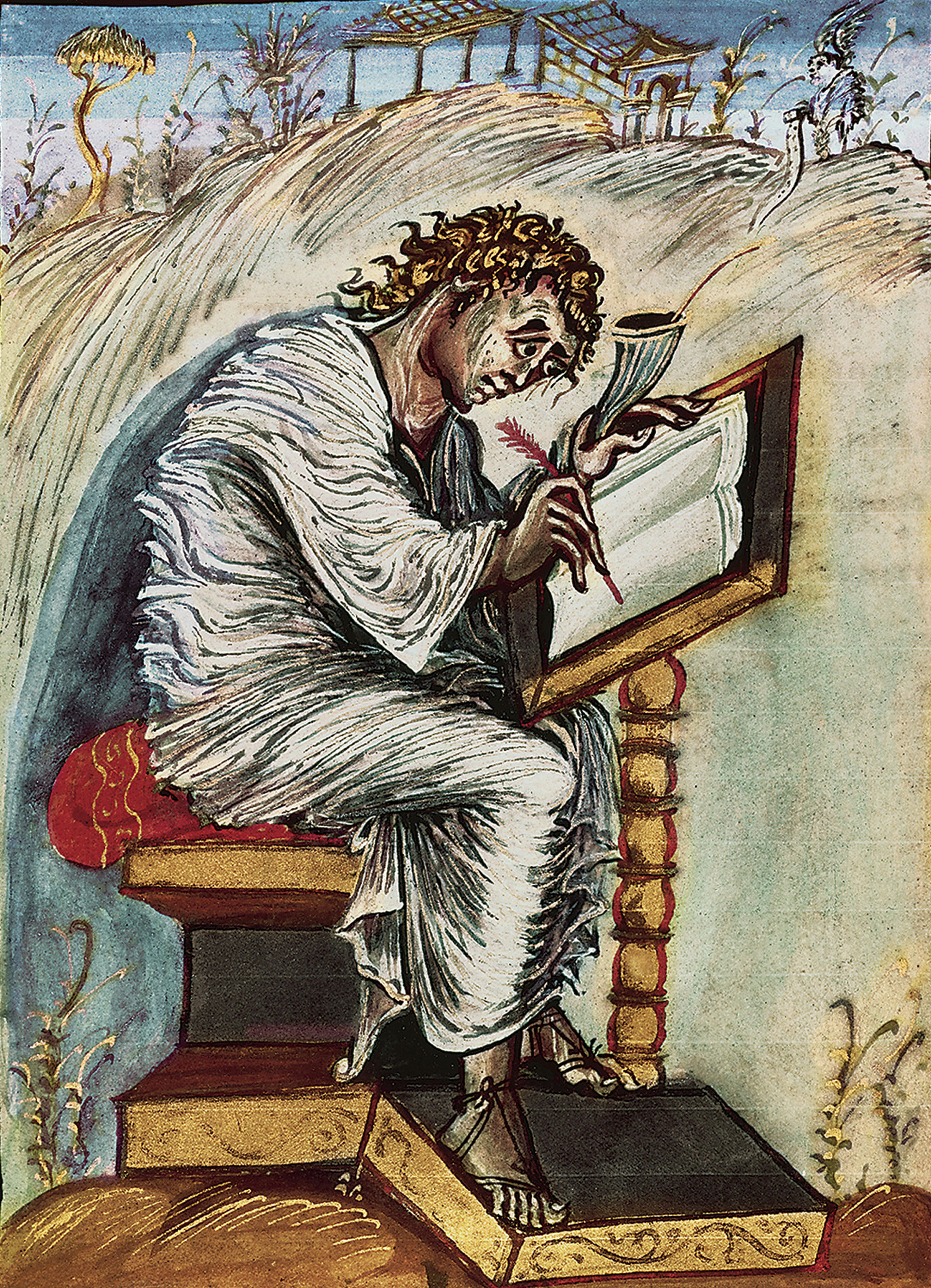
[Right: Saint Matthew, Ebbo Gospels, 9th century, Municipal Library, Épernay, France: Wikipedia]

I will document every verse in each New Testament book which shows that the Lord Jesus Christ of the New Testament is Jehovah (Heb. Yahweh) of the Old Testament, come in the flesh. These verses are from my morning `quiet time' study and already posted on my web page Jesus is Jehovah!

This page has now been completed, so after adding some further quotes, I will start working on "Jesus is Jehovah in Mark" in parallel with posting my completed pages on 1 Thessalonians and other New Testament books in chronological order (see also my "Jesus is Jehovah in Galatians").

Also, as previously explained: "That the Lord Jesus Christ is revealed in the New Testament as being Jehovah (Heb. Yahweh) of the Old Testament, does not preclude the other two Persons of the Holy Trinity (Mt 28:19; 2Cor 13:14; 1Pet 1:2): the Father (Dt 32:6; Isa 63:16; 64:8; Mal 1:6) and the Holy Spirit (Lk 4:18 = Isa 61:1; Acts 5:3-4,9; 2Cor 3:17), also being, as revealed in the New Testament, Jehovah: the one Triune God."

Unless otherwise indicated, Bible verse links will be the American Standard Version, because it translated the Heb. Yahweh as "Jehovah," rather than "LORD."

2. JESUS HAS NAMES & TITLES OF JEHOVAH
Jesus (Heb. Yeshua, "Yahweh is salvation"). Jesus' name (Heb. Yeshua, " Yahweh is salvation"), (France, 1985, p.78; Rhodes, 1992, p.178; WB&TS, 1989, p.209) was uniquely given to Him by God (Mt 1:20-21,25; Lk 1:30-32; 2:21). Yet salvation belongs to Jehovah (Ps 3:8).

God. Jesus is "God [Gk. ho Theos "the God"] with us" (Mt 1:22-23; Isa 7:14). Jesus is "the Mighty God" [Heb. 'el gibbowr] (Isa 9:6-7. Cf. Mt 4:13-16 = Isa 9:1-2). But Jehovah is the Mighty God [Heb. 'el gibbowr] (Isa 10:20-21; Jer 32:18).

Son of God. Jesus is "the Son of God" (Mt 4:3-4; 14:25-33; 16:15-17; 26:63-64; 27:38-43; 27:54), i.e. equal in nature to God the Father (Hoekema, 1972, pp.132-135). Or simply "the Son" (Mt 11:27; 21:38; 24:36). God the Father acknowledged Jesus as "my beloved Son" (Mt 3:16-17; 17:5; Ps 2:7. Cf. Mk 1:9-11; 9:2-7; Lk 3:21-22; 9:28-35; Jn 1:32-34). The demons recognised that Jesus was the Son of God (Mt 8:28-29; Mk 3:11; Lk 4:41; 8:27-28). Jesus claimed that as "the Son" only He truly knows the Father (Mt 11:27 = Lk 10:22; Jn 1:18). Jesus is the vineyard owner's "beloved son" in the Parable of the Tenants (Mt 21:33-41; Mk 12:1-9; Lk 20:9-16). He is the son of the king in the Parable of the Wedding Banquet (Mt 22:1-14).

Jesus made a distinction between His and the disciples' relationship with the Father: between "my Father" (Mt 7:21; 10:32-33; 11:27; 12:50; 16:17; 18:10,19; 20:23; 25:34; 26:39,42,53 and "your Father" (Mt 5:16,45; 6:1,8,15; 7:11; 10:20,29; 18:14; 23:9); between "my heavenly Father" (Mt 15:13; 18:35) and "your heavenly Father" (Mt 5:48; 6:14,26,32; Lk 11:13). Cf. John 20:17.

Son of Man. Jesus claimed to be the Son of Man (Mt 8:20; 11:19; 12:32,40; 16:1; 17:9,12,22; 20:18; 20:28; 26:2,24,45; Dn 7:13-14); who has has authority on earth to forgive sins (Mt 9:6; Mk 2:10; Lk 5:24). Who is "Lord of the Sabbath" (Mt 12:8; Lk 6:5). Who sows the good seed (Mt 13:37). Who is sitting at the right hand of God the Father (Mt 26:64; Mk 14:62), from where He is going to come again (Mt 24:27,37,39; 24:44), with power and great glory (Mt 24:30; 26:64), and with his angels (Mt 16:27; Mk 8:38; Lk 9:26); who He will send out to gather the wicked (Mt 13:41) and reward each person according to what he has done (Mt 16:27). Who will sit on his glorious throne in heavenly glory (Mt 19:28; 25:31). The Jewish religious leaders regarded Jesus' claim to be the Son of Man as "blasphemy" (Mt 26:65; Mk 14:64).

Second Person of Trinity. Jesus the Son is mentioned in the same verse(s) with the Father and Holy Spirit (Mt 3:16-17; 28:19. Cf. Mk 1:10-11; Lk 1:35; 3:21-22; Jn 1:32-34; 3:34-35; 2Cor 13:14; Gal 4:6; 1Pet 1:2). Jesus' disciples are to be baptised into the "name" (singular) "of the Father and of the Son and of the Holy Spirit" (Mt 28:19).

Jehovah. I AM (Gk. ego eimi) Jesus is I AM. "It is I" [Gk. ego eimi, "I am" ] (Mt 14:27; Mk 6:50; Jn 6:20). Cf. Gk. ego eimi, "I am" (no "he") Jn 6:35,48, 6:51; 8:12,24,28,58; 9:5; 10:7,9,10-11,14; 11:25; 13:19; 14:6; 15:1,5; 18:4-6. Jesus is I AM, the Christ, the Son of God (Mk 14:61-62; Mt 26:63-64; Lk 22:70). But I AM is Jehovah (Ex 3:14-15; Dt 32:39; Isa 41:4; 43:10; 46:4; 52:6); God (Mt 22:31-32; Mk 12:26; Lk 20:37). Jesus never prayed to Jehovah, but to "Father" (Mt 11:25-26; 26:39, 42. Cf. Mk 14:36; Jn 11:41; 12:27-28; 14:16; 16:26; 17:1,5,11,21,24-25). And Jesus taught His followers to pray to "Father," not to "Jehovah" (Mt 6:9; Lk 11:2,13), which they did (Rom 8:15; Eph 1:16-17; 3:14; 5:20; Col 1:3). This is inexplicable for a devout Jew as Jesus was, unless Jesus is Jehovah.

Lord. The divine Name (Heb. YHWH, "Yahweh") was translated nearly7,000 times as Gk. kurios, "Lord," in the Septuagint (LXX), the Greek translation of the Old Testament, which was the Bible of the earliest Christians. Yet Jesus is called "Lord" (Mt 8:2,6,8,21,25; 9:28; 14:28,30; 15:25,27; 16:22; 17:4,15; 18:21; 20:30-31,33; 22:43,45; 26:22); "O Lord" (Mt 15:22; Lk 5:8); "the Lord" (Mt 3:3; 18:27; 20:8; 21:3; 21:40; 22:44; 23:39; 24:50; 25:19; 28:6); "your Lord" (Mt 24:42); "Lord Lord" (Mt 7:21-22; 25:11; Lk 6:46). Jesus is David's Lord (Mt 22:41-46 = Mk 12:35-37 = Lk 20:41-44; Ps 110:1). Lord of the sabbath Jesus is "Lord of the sabbath" (Mt 12:8; Mk 2:28; Lk 6:5). But it was Jehovah who instituted the sabbath commandment (Ex 20:8-11; 31:12-16; 35:1-3; Lev 23:1-3; Dt 5:6,12-14).

Master. Jesus is the "lord" or "master" [Gk. kurios] with whom His servants must finally settle accounts (Mt 24:45-51; 25:14-3. Cf. Mk 13:33-37; Lk 12:35-48; 19:11-27). Yet Jehovah is the Master of His servants look to (Ps 123:2; Mal 1:6).

King. Jesus is "the King of the Jews" (Mt 2:2; 27:11, 29, 37; Mk 15:2,9,12,18, 26; Lk 23:3,37-38; Jn 18:33,39; 19:3,19,21); the "King of Israel" (Mt 27:42; Mk 15:32; Jn 1:49; 12:13); King of Jerusalem (Mt 21:5; Jn 12:15 = Zec 9:9). Yet Jerusalem is the "city of the great King" (Mt 5:34-35), who is Jehovah (Ps 48:2). Jesus is now reigning at God's right hand (Mt 22:44; 26:64. Cf. Mk 12:36; 14:62; 16:19; Lk 20:42; 22:69; Acts 2:25, 33-34; 5:31; 7:55-56; Rom 8:34; Eph 1:20; Col 3:1; Heb 1:3,13; 8:1; 10:12; 12:2; 1Pet 3:22 = Ps 110:1). Kingdom Jesus has the keys of the kingdom of heaven (Mt 16:19; 18:18. Cf. Rev 3:7 = Isa 22:22). Jesus' kingdom is God's kingdom (Mt 16:28; Mk 9:1; Lk 9:27). Jesus is the King of the kingdom of heaven (Mt 18:23; 22:2,7,11,13; 25:34,40). Jesus will implement the Father's decision who inherits God's kingdom (Mt 20:23; 25:33-34). But Jehovah is King forever (Ps 10:16); the great King above all (Ps 95:3); the King of glory (Ps 24:7- 10); who will be King of all the earth (Zec 14:9).

Shepherd. Jesus is the Shepherd of Israel (Mt 2:6 = Mic 5:2; 2Sam 5:2). He is "the Shepherd" (Mt 26:31; Mk 14:27 = Zec 13:7; Mt 9:36; 25:32. Cf. Mk 6:34; Jn 10:2,11,14, 10:16; Heb 13:20; 1Pet 2:25; 5:4; Rev 7:17. The church is Jesus' flock (Mt 26:31; Lk 12:32; Jn 10:12,16,26-27; 21:16-17; Ac 20:28-29; 1Pet 5:2-3). But Jehovah is the shepherd of His sheep (Ps 23:1; Eze 34:15); the Old Testament church was Jehovah's flock (Ps 74:1-2; 100:3; Isa 40:11; Jer 13:17; 23:2; 31:10; Eze 34:17; Mic 5:4) and Jehovah called His followers "my sheep" (Eze 34:6,8,10-11,12,15,19,31).

Bridegroom. Jesus is "the bridegroom" (Mt 9:15 = Mk 2:19-20 = Lk 5:34-35; Mt 25:1-13. Cf. Jn 3:29; Eph 5:23-32; Rev 21:2,9; 22:17). But Jehovah is His people's Bridegroom (Isa 62:4-5; Jer 2:31-32; 3:1; Hos 2:18-20).

Angels. Jesus is "the Son" distinct from "the angels" (Mt 24:36; Mk 13:32; Heb 1:4-5). Jesus will come with all the angels (Mt 16:27; 24:30-31; 25:31. Cf. Jude 14; Zec 14:5), which are "His angels" (Mt 13:41; 16:27; 24:31. Cf. Mk 8:38; 13:27). Yet the angels are God's (Lk 12:8,9; 15:10; Jn 1:51; Rev 3:5).

Name. To receive someone in Jesus' name is to receive Jesus (Mt 18:5; 24:5. Cf. Mk 9:37; Lk 9:48). Jesus' followers will be persecuted for His name's sake (Mt 10:22; 19:29; 24:9. Cf. Mk 13:13; Lk 21:12; 21:17; Jn 15:21; Ac 9:16; Rom 1:5; Rev 2:3. Gatherings together are to be in Jesus' name (Mt 18:20; 1Cor 5:4).

3. OLD TESTAMENT PASSAGES ABOUT JEHOVAH APPLIED TO JESUS
Mt 3:1-3; 11:7-10 = Isa 40:3; Mal 3:1. Jehovah who came was Jesus. John the Baptist was sent to prepare the way for the coming of Jehovah (Mt 3:1-3; 11:7-10 = Isa 40:3; Mal 3:1; Mk 1:2-4; Lk 3:2-6; 7:24-27; Jn 1:19-23), but it was Jesus who came (Mt 4:17; Mk 1:14-15; Lk 4:14-15; Jn 1:28-34).

Mt 27:9 = Zec 11:12-13. Jesus is Jehovah priced at thirty pieces of silver. Jesus fulfilled the Old Testament prophecy of Jehovah being bought for "thirty pieces of silver" (Mt 27:9; 26:15; 27:3; Zec 11:12-13; Jer 18:1-6; 19:1-11; 32:6-9).

4. JESUS HAS ATTRIBUTES OF JEHOVAH
Omniscience. Jesus knew the thoughts of the scribes and Pharisees (Mt 9:2-4; 12:22-25; Mk 2:3-8; Lk 5:18-22; 6:6-8); of their plotting to kill him (Mt 12:14-15). But it is Jehovah alone who searches every heart and understands every motive behind thoughts (1Ki 8:39; 1Chr 28:9); who searches, knows and understands man's thoughts and his every action (Ps 94:11; 139:1-2; Pr 24:12; 2Ki 19:27; Jer 12:3; 17:10).

Omnipresence. Jesus is God with His people (Mt 1:22-23; Isa 7:14). Wherever disciples are gathering together in His name, Jesus is in their midst (Mt 18:20). Jesus is with His disciples in all nations always (Mt 28:20). Yet it is Jehovah who is with His people always (Ex 3:12; Dt 31:6; Jos 1:5; Heb 13:5).

Holy. Jesus distinguished Himself from all other men who "are evil" (Mt 7:11; Lk 11:13). Jesus is "righteous" (Mt 27:19,24. Cf. Lk 23:47; Ac 3:14; 7:52; 22:14; Jas 5:6; 1Pet 3:18; 1Jn 2:1; 3:7). Only God is good (Mt 19:16-17; Mk 10:17-18; Lk 18:18-19), but Jesus is without sin (Jn 8:46; Acts 3:14; 2Cor 5:21; Heb 4:15; 7:26; 9:28; 1Pet 1:19; 2:21; 1Jn 3:5); therefore Jesus is God.

Glory. Jesus at His transfiguration showed His glory (Mt 17:1-6; Mk 9:2-8; Lk 9:28-36; Jn 1:14; 2Pet 1:17). Jesus will come again in His own glory (Mt 25:31; Lk 9:26; 21:27; Tit 2:13) and in His Father's glory (Mt 16:27; 24:30; Mk 8:38; 13:26). Jesus will sit on the throne of his glory (Mt 19:28; 25:31; Mk 10:37). But only Jehovah God has glory in that sense (Lk 2:9; Ac 7:2, 55; Rom 1:23; 3:23; Eph 1:17; Php 2:11; Rev 15:8).

Pre-existent. Jesus is the One "whose goings forth are from of old, from everlasting" (Mt 2:1-6 =Mic 5:2). He had often wanted to gather Jerusalem's children together, as a hen gathers her chicks (Mt 23:37; Lk 13:34). But it is Jehovah who is spoken of as a mother bird protecting her offspring under her wings (Ps 17:1,8; 57:1; 61:1-4; 91:1-4; Isa 31:5).

Authority. Jesus taught with absolute authority (Mt 7:28-29; Mk 1:22; Lk 4:32). He did not say, "thus says Jehovah" but "I say" (Mt 5:22,28,32,34,39,44;11:22,24; 12:6; 17:12; 19:9; Mk 9:13; Lk 6:27)! Jesus closed the Old Testament era by declaring that John the Baptist was the last Old Testament prophet (Mt 11:13 = Lk 16:16).

Sovereignty. All things had been delivered to Jesus by His Father (Mt 11:27 = Lk 10:22). Jesus has been given "all authority in heaven and on earth" (Mt 28:18). Cf. Jn 3:35; 13:3; 17:2; Acts 10:36; 1Cor 15:27; Eph 1:20-22; Php 2:9-10; Dn 7:13-14. Yet Jehovah is above all (1Ch 29:11; Ps 95:3; 97:9; 113:4; 135:5).

Great. Jesus is greater than the temple, the prophet Jonah (and by implication all the prophets) and greater than King Solomon (and by implication all the Kings of Israel) (Mt 12:6,41-42).

5. JESUS DOES WORKS OF JEHOVAH
Commandments. Jesus gave His own commandments by improving on the Law of Moses: "You have heard" in the Law, but "I say ..." (Mt 5:21-22,27-28,31-32,33-34,38-39,43-44; 12:5-6; 19:8-9). Jesus also made pronouncements on His own authority (Mt 11:21-24; 17:11-12. Cf. Mk 9:12-13; Lk 6:26-27; Jn 13:34-35; 14:15,21,23; 15:10,12,17; 1Cor 7:25; 14:37; 2Pet 3:2. Jesus' disciples of all nations are to be taught to observe all that He has commanded them (Mt 28:19-20).

Covenant. Jesus made a New Covenant (Mt 26:26-28 = Mk 14:22-24 = Lk 22:19-20 = 1Cor 11:23-25. Cf. 2Cor 3:6,14; Heb 7:22; 8:6-13; 9:15; 12:24; 13:20). But Jehovah was to make that New Covenant (Jer 31:31-33; Heb 8:8-12; 10:15-17).

Miracles. Nature miracles. Jesus commanded a storm on the Sea of Galilee to be still and and it immediatedly became calm (Mt 8:24-27; Mk 4:37-41; Lk 8:22-25). But it is Jehovah God alone who commands the sea and it obeys Him (Job 38:8-11; Ps 65:5-7; 89:8-9; 107:23-30). Jesus fed a crowd of over five thousand by multiplying five loaves of bread and two fish (Mt 14:14-21; Mk 6:34-44; Lk 9:11-17; Jn 6:5-13; and another crowd of four thousand by multiplying seven loaves of bread and a few small fish (Mt 15:32-38; Mk 8:1-9). But it was Jehovah who through Elisha multiplied twenty loaves of bread and ears of grain to feed a hundred (2Ki 4:42-44). Jesus walked on a stormy sea (Mt 14:25-27; Mk 6:48-51; Jn 6:18-21). But it is God who treads the waves of the sea (Job 9:8; Ps 77:19). Jesus ensured that the next fish Peter caught would have a shekel coin in its mouth (Mt 17:27). Jesus cursed a fig tree and it withered overnight (Mt 21:19-20; Mk 11:13-14, 20-21).

Healing miracles. Jesus did many and varied miracles of healing, including sickness (Mt 4:23-24; 9:35; 14:13-14, 34-36); disease (Mt 4:23-24; 9:35); pain (Mt 4:24); demon-possessed (Mt 4:24; 8:16, 28-32; 9:32-33; 12:22; 15:21-28); seizures (Mt 4:24; 17:14-18); paralysis (Mt 4:24; 8:7-13; 9:1-7); leprosy (Mt 8:2-3; 11:4-6); fever (Mt 8:14-15); bleeding (Mt 9:20-22); blindness (Mt 9:27-30; 11:4-5; 15:29-31; 20:29-34; 21:14); lameness (Mt 11:4-6; 15:29-31; 21:14); deafness (Mt 11:4-6); dumbmess (Mt 15:29-31); shriveled hand (Mt 12:9-13); crippled legs (Mt 15:29-31) and death (Mt 9:18-19,23-25; 11:4-6). Jesus healed at a distance (Mt 8:7-13; 15:21-28). Some were healed by touching Jesus' clothes (Mt 9:20-22; 14:34-36). He healed large crowds (Mt 12:15; 14:14; 15:30; 19:2).Yet it is Jehovah who heals (Ex 15:26; Num 12:13; 2Ki 2:21; 2Ki 20:5,8; 2Ch 30:20; Ps 6:2; 30:2; 41:4; Isa 19:22; 30:26; 57:19; 58:8; Jer 17:14; 30:17; Hos 6:1).

Forgiveness of sins. Jesus forgave sins (Mt 9:2 = Mk 2:5 = Lk 5:20. Cf. Lk 7:47-49). Jesus claimed that He had the authority to forgive sins (Mt 9:6 = Mk 2:10 = Lk 5:26). But only God could forgive sins (Mt 9:2-3; Mk 2:5-7; Lk 5:18-21; 7:47-50; Ps 103:12; Isa 1:18; 43:25; 55:7; Jer 31:34; Mic 7:19).

Church. Jesus will build His own "church" [Gk. ekklesia (Mt 16:18. Cf. Act 20:28; 1Cor 1:2; Eph 1:20-22; 2:19-20; 3:21; 5:23-32; Col 1:24; 1Th 1:1; 2:14; 2Th 1:1). But the same Gk. word ekklesia was used in the Greek Old Testament (Septuagint or LXX) of the assembly of Jehovah's people (Dt 4:10; 23:2, etc). Cf. Ac 7:38; Heb 2:12, etc). Jesus is the cornerstone of God's new spiritual building (Mt 21:42; Mk 12:10; Lk 20:17; Ac 4:11; Eph 2:20; 1Pet 2:6-7; Ps 118:22). The elect are Jesus' (Mt 24:31 = Mk 13:27).

Prophets. Jesus sends prophets, wise men and scribes (Mt 23:34; Lk 11:49). But it is Jehovah who sent the prophets (2Ch 24:19; Jer 25:4; 29:19).

Judgment. Judge Jesus is the Lord to whom we all will have to give account of our works on the Day of Judgment (Mt 7:21-23; 25:11. Cf. Ac 10:42; 17:31; 2Cor 5:10; 2Tim 4:1). All the nations will be gathered before Jesus' throne of judgment (Mt 25:32). But it is Jehovah, before whom all the nations will be gathered together for judgment (Joel 3:1-2). And only Jehovah is the judge of all the earth (Gn 18:25; 1Chr 16:33; Ps 96:13; 98:9) and of the wicked (Mal 3:5).Separation Jesus will separate the wheat from the chaff (Mt 3:11-12; Lk 3:16-17) and the sheep from the goats (Mt 25:31-32). But it was Jehovah who judged His flock between sheep and goats (Eze 34:17). Rewards One's attitude to those bearing the name of Jesus will determine one's eternal reward or punishment (Mt 10:42 = Mk 9:41; Mt 25:37-46). Eternal life Those who have left everything for Jesus' sake shall inherit eternal life (Mt19:29; Mk 10:29-30; Lk 18:29-30).Condemnation Jesus will decide who is to be eternally condemned (Mt 7:22-23). Punishment Jesus will burn the chaff with unquenchable fire (Mt 3:12; Lk 3:17). Degrees of punishment depends on rejection of Jesus' words (Mt 10:14-15).

6. JESUS RECEIVES HONOR & WORSHIP DUE TO JEHOVAH
Worship. Jesus was worshipped (Gk. proskuneo). by" the magi at His birth (Mt 2:2,11); those seeking healing (Mt 8:2; 9:18; 15:22,25) or divine favours (Mt 20:20); the disciples as "the Son of God" (Mt 14:24-33) and as the resurrected Lord (Mt 28:9,17). But only Jehovah was to be worshipped (Gk. proskuneo) (Mt 4:9-10; Lk 4:6-8; Dt 6:13).

Know. A personal relationship with Jesus is necessary to escape eternal condemnation (Mt 7:22-23).

Acknowledged. Jesus said He was to be acknowledged (Mt 10:32-33; Lk 12:8-9), echoing the same words that Jehovah had said He was to be acknowledged (1Sam 2:30).

Disciples. One cannot be Jesus' disciple unless one's love for Him is greater than that of of his family and even his own life (Mt 10:37; Lk 14:26). But we are commanded to love Jehovah with all heart, soul and strength (Mt 22:37; Mk 12:30; Lk 10:27; Dt 6:5; 10:12; 11:13; 13:3; 30:6; Jos 22:5. A disciple of Jesus must bear his own cross of suffering and shame and come after Jesus (Mt 10:38; Lk 9:23; 14:27).

Obeyed. Jesus words are to be put into practice (Mt 7:24-27; Lk 6:46-49) But it is Jehovah who must be obeyed (Dt 13:4; 27:10; 30:2,8,10,20; 1Sam 15:22; Jer 3:13,25; 9:13; 26:13; 40:3; 42:6,21; Dn 9:10,14; Zec 6:15).

Followed. Jesus demanded His disciples follow Him exclusively and unreservedly (Mt 8:22; 9:9; 16:24; 19:21. Cf. Mk 2:14; 8:34; 10:21; Lk 5:27; 9:23; 9:59-60; 18:22; Jn 1:43; 10:27; 12:26; 21:19). But it is Jehovah who must be exclusively followed (Num 14:43; 32:12; Dt 1:36; 7:4; Jos14:8,9,14; 22:16,18,23,29; 1Sam 12:14,20;15:11; 1Ki 18:21; 2Ki 17:21; 18:6; 2Chr 25:27; 34:33; Isa 59:13; Hos 6:3).

Served. We are to take Jesus' yoke of slavery upon us (Mt 11:28-30) and He will paradoxically give us rest. But it was Jehovah who gives His people rest (Ex 33:14; Dt 12:9-10; 25:19; Jos 1:13; 11:23; 21:44; 22:4; 23:1; 1Ki 8:56; Isa 63:14; Jer 6:16; 31:2; Heb 4:1-11).

7. OBJECTIONS TO JESUS BEING JEHOVAH
Jesus occasionally spoke as though Jehovah was a different Person. However, some of these were Jesus quoted an Old Testament passage which mentioned Jehovah (Mt 4:7; Lk 4:12 = Dt 6:16; Mt 4:10; Lk 4:8 = Dt 6:13; Mt 5:33 = Lev 19:12; Num 30:2; Dt 23:21; Mt 21:42 = Ps 118:22-23; Mt 22:31-32; Mk 12:26; Lk 20:37 = Ex 3:4-6 and Mt 22:37; Mk 12:30; Lk 10:27 = Dt 6:4-5).

Lack of knowledge. Jesus did not know the day and hour of His second coming (Mt 24:36; Mk 13:32). But this may have been only a temporary self-limitation of Jesus' omniscience as part of His self-emptying in taking upon Himself a human nature (Php 2:6-8; Heb 2:8-9). After His resurrection, Jesus no longer says that He does not know the time or date of the coming of His Kingdom (Ac 1:7). Alternatively, since Mt 24:36; Mk 13:32 seems to exclude the Holy Spirit from knowing the time of Jesus' return, it may reflect a limitation (or self-limitation) of omniscience within the Trinity of the Son and Holy Spirit regarding the Father's plans, until He reveals them.

The Father is Jesus' God. Jesus called the Father "my God" (Mt 27:46; Mk 15:34; Jn 20:17; Rev 3:2,12; the Father is "His God" (Rev 1:6); "the God and Father of our Lord Jesus Christ" (Rom 15:6; 2Cor 1:3; Eph 1:1-3; 1Pet 1:3); "the God of our Lord Jesus Christ" (Eph 1:17); "God the Father of our Lord Jesus Christ" (Col 1:3). In His human nature (Lk 24:15-31; 33-43; Jn 20:24-28; Jn 21:4-15), the Father is Jesus' God. And even if the Son is in a permanent state of subordination to the Father (Jn 14:28; 1Cor 11:3), that does not preclude the Son being one in nature and substance with the Father (Jn 1:1; 10:30; Php 2:6 NIV).

8. CONCLUSION
In Matthew, Jesus has the same names and titles as Jehovah; Old Testament passages about Jehovah are applied to Jesus; Jesus has attributes of Jehovah; Jesus does the works of Jehovah; Jesus receives honor and worship due to Jehovah; and there are no valid objections to Jesus being Jehovah. Therefore Jesus is Jehovah!

See `tagline' quotes below relating to the above (original emphasis italics, my emphasis bold).

PS. The next (second) posted in this series is "Jesus is Jehovah in Galatians."

Stephen E. Jones.
My other blogs: CreationEvolutionDesign & The Shroud of Turin


"[Mt 1:21] The language reminds us of similar revelations in the Old Testament (Gn. 16:11; 17:19; etc.), as well as of Isaiah 7:14, soon to be quoted. Names, especially divinely revealed names, are full of meaning, and this is often revealed by a word-play which need not always correspond to the actual etymology of the name. In the case of Jesus (the Greek form of Joshua or Jeshua, a common name .. both the sound (cf. Heb. yosi'a, 'he will save') and the probable etymology ('Yahweh is salvation', or 'O save, Yahweh') contribute to the explanation for he will save his people from their sins. His people will be in the first instance the Jews (Matthew uses this term laos particularly for the chosen race), but the man who wrote 28:19 must have expected a wider application ultimately. Salvation from sins is an element in the Old Testament hope (e.g. Is. 53; Je. 31:31-34; Ezk. 36:24-31) and in later Messianic expectation (Psalms of Solomon 17:28-29, 41; etc.), but not the dominant one. Its isolation here warns the reader not to expect this Messiah to conform to the more popular hope of a national liberator, and sets the scene for the unfolding understanding of Jesus' mission in the Gospel." (France, R.T., 1985, "Matthew: An Introduction and Commentary," The Tyndale New Testament commentaries, Inter-Varsity Press: Leicester UK, p.78).

"Christ as the Son of God. The most recent Jehovah-Witness publication in which their view of the person of Christ is set forth and defended is a 64-page booklet published in 1962, entitled `The Word' - Who Is He? According to John. ... The authors claim that the title Son of God .. implied that Christ was ... a person inferior to God the Father ... In proof of this contention the authors adduce Christ's discussion with the Jews who had taken up stones to stone him, recorded in John 10. Though Jesus here said, `I and the Father are one,' the authors contend, he did not claim to be equal to the Father, but rather claimed to be less than God ... Jesus, it is said, here only claimed to be the Son of God; hence the Jews were quite in error when they thought Christ was uttering blasphemy. By way of refutation, it should first be pointed out that, according to John 5:18, the Jews sought to kill Jesus `because not only was he breaking the Sabbath but he was also calling God his own Father, making himself equal to God ' (NWT). The Jews, therefore, did not understand the expression Son of God as Jehovah's Witnesses apparently do. For the latter, the term means someone inferior to the Father. By the Jews of Jesus' day, however, the term was interpreted as meaning full equality with the Father, and it was on account of this claim that they sought to kill him. This point becomes quite clear when we compare John 10:33 with 10:36. The former verse reads, `We [the Jews] are stoning you [Jesus], not for a fine work, but for blasphemy, even because you, although being a man, make yourself a god" (NWT) [KJ, ASV, and RSV: `make yourself God.']. The latter passage reads, `Do you say to me whom the Father sanctified and dispatched into the world, "You blaspheme," because I said, I am God's Son?' (NWT). Putting together these two verses (if we translate verse 33 as in the standard versions), we see that Christ's calling himself the Son of God was interpreted by the Jews as a claim to equality with the Father. When Jesus was tried by Caiaphas, furthermore, He was asked, `By the living God I put you under oath to tell us whether you are the Christ the Son of God!' (Mt. 26:63, NWT). After Jesus had answered this question in the affirmative, the high priest is reported to have said, `He has blasphemed! What further need do we have of witnesses?' (v. 65, NWT). Obviously, the high priest understood the expression Son of God as meaning full equality with the Father since he called Jesus' assumption of this title blasphemy. If Jesus meant by the term Son of God something less than equality with the Father, He would by His affirmative answer be guilty of uttering an untruth, since for the Sanhedrin this title meant such equality. Surely if Jesus did not intend His words to be understood as meaning what the high priest and the rest of the Sanhedrin thought they meant, He could have and should have corrected their understanding of these words. When, after the trial before Caiaphas, Jesus appeared before Pilate, the Jews said to the governor, `We have a law, and according to the law he [Jesus] ought to die, because he made himself God's son' (Jn. 19:7, NWT). Again it is crystal-clear that the Jews understood the expression Son of God, which Jesus acknowledged as descriptive of himself, as meaning nothing less than full equality with the Father. Is it likely, now, that present-day Jehovah's Witnesses know better what Jesus claimed to be, when He called Himself the Son of God, than the Jews who were His contemporaries?" (Hoekema, A.A., 1972, "Jehovah's Witnesses," [1963], Eerdmans: Grand Rapids MI, Reprinted, 1990, pp.132-135).

"Gabriel then said, `Do not be afraid, Mary, you have found favor with God. You will be with child and give birth to a son, and you are to give him the name Jesus. He will be great and will be called the Son of the Most High. The Lord God will give him the throne of his father David, and he will reign over the house of Jacob forever; his kingdom will never end' (Lk 1:30-33). The angel's pronouncement that the child would be called Jesus is full of meaning. The name `Jesus' means `Yahweh saves' or `Yahweh is salvation.' This name is the counterpart of the Old Testament name, `Joshua.' Just as Joshua in the Old Testament led Israel out of the wilderness experience into a new land and a new life, so Jesus would lead people out of a spiritual wilderness experience into a new sphere of existence and a new life." (Rhodes, R., 1992, "Christ Before the Manger: The Life and Times of the Preincarnate Christ," Baker: Grand Rapids MI, pp.178-179).

"Jesus Christ ... The Hebrew form of the name Jesus means `Jehovah Is Salvation'; Christ is the equivalent of the Hebrew Ma-shi'ach (Messiah), meaning `Anointed One.'" (WB&TS, 1989, "Reasoning from the Scriptures," [1985], Watchtower Bible & Tract Society of New York: Brooklyn NY, Second edition, p.209).